
A retail entrance has to invite people in, support the display behind the glass and cope with repeated use by customers, staff, deliveries and cleaners. That is why choosing an automatic door is not only a question of whether the frontage looks open or minimal. The door has to move predictably, leave a usable passage, work with nearby shelving or promotional stands, and remain understandable to people approaching from either direction. Before settling on a glass style, frame finish or door arrangement, map what happens at the threshold over a normal day. Watch where people pause, where they queue, how pushchairs or trolleys pass, and whether staff regularly carry stock through the doorway. Those observations often reveal whether a proposed layout will feel calm in use or create avoidable interruptions at the entrance.
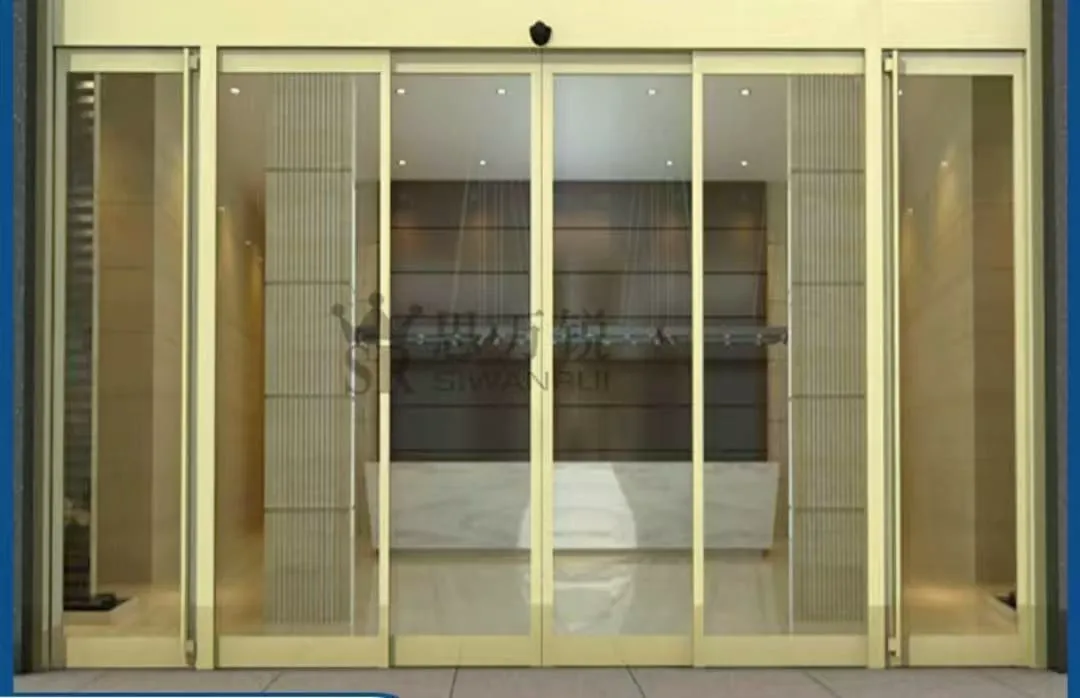
Framed glass retail entrance showing the door opening, side framing and shopfront relationship.
Start with the entrance routine
Begin with the actual routine rather than a catalogue image. Note whether customers arrive in a single stream from a pavement, from a mall corridor or from a lobby where they may approach at several angles. Consider where they stand while looking at displays, where a queue forms and whether a person can pause near the door without being struck by another person’s route. A narrow-looking entrance can still work well if movement is orderly; a wider opening can feel awkward if fixtures pull people into the door zone.
Also account for the less visible journeys. Staff may bring cartons, rails or cleaning equipment through the entrance before opening hours, while deliveries may use it at times when customer flow is low. Ask whether the door needs to remain open for those tasks, whether an alternative access route exists and where loose items are placed temporarily. Keeping the track area and nearby floor free of clutter is a simple habit that helps the door run properly and makes early changes in behaviour easier to notice.
- Observe customer approach routes at quiet and busy periods.
- Allow for stock movement, cleaning and temporary displays.
- Keep the passage clear after the door is open.
Match the door arrangement to the frontage
Sliding arrangements are often considered where a shop needs a clean glazed frontage, but the available side space for moving leaves is as important as the opening itself. Fixed panels, wall returns, display units, shutters and signage can all affect where equipment and moving panels can be located. A door that appears centred in an elevation may not give the most sensible passage once people, fixtures and access routes are considered.
Do not judge the opening solely by the view from the street. Stand inside as well and look for conflict with checkout queues, security positions, display tables and staff routes. If the door opens towards a circulation area, identify what remains clear while the leaves are moving and when they are fully open. Where escape, fire arrangements, accessibility or structural safety may be relevant, the final arrangement should be confirmed for the particular premises and with the appropriate professional requirements rather than assumed from a standard layout.
- Check the clear passage, not only the glass width.
- Consider where open leaves sit relative to displays.
- Avoid assuming one arrangement suits every shopfront.
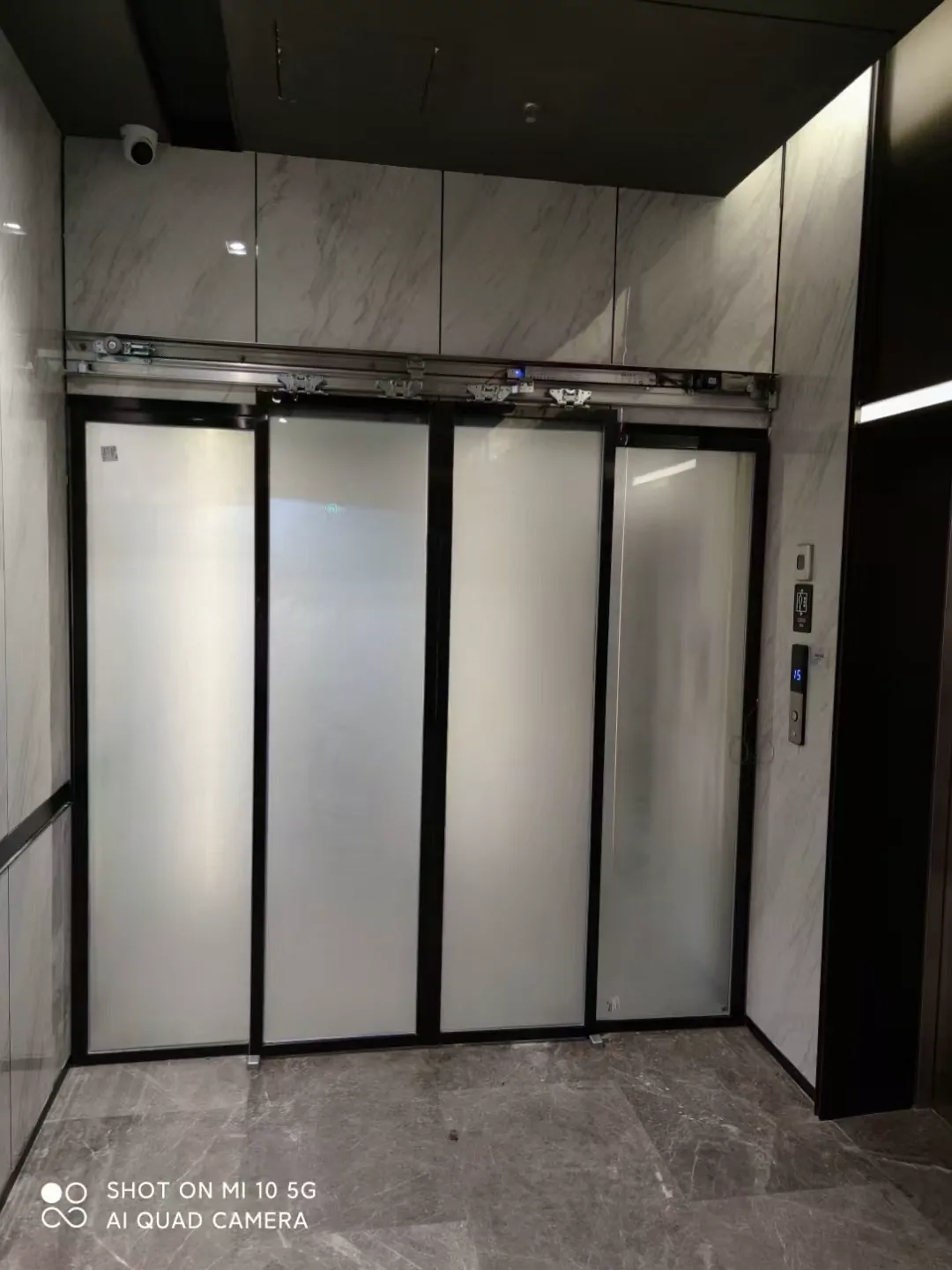
Glass automatic-door arrangement where panel alignment, overhead equipment space and entrance clearance need consideration.
Assess existing glass before conversion
An existing manual glass door is not automatically a suitable base for automation. The door leaf, its weight, dimensions, glass type, holes and existing hardware all influence what can be retained or changed. The surrounding frame or structure also needs to support the proposed arrangement, and the route for any overhead track or operator must be physically available. A neat-looking glazed entrance can conceal limited headroom, unsuitable side space or fittings that do not suit a new movement pattern.
For a useful first conversation, provide a full elevation of the shopfront, then close photographs of top and bottom fittings, frame junctions and any visible gaps above the door. If possible, include a side-angle photo showing the available return space and a ruler or known reference only where it can be placed safely without interfering with the door. These images help identify questions for a site inspection, but they cannot confirm glass condition, load-bearing capacity, hidden fixings or final suitability remotely.
- Glass thickness alone is not enough information.
- Record panel size, holes and existing fittings.
- Check support, headroom and track space together.
Design sensing around real customer behaviour
A retail entrance should respond without making customers hesitate, but a door that activates too early or too often can distract staff and interrupt the shopfront. Look at likely triggers such as reflective decorations, hanging promotional material, people browsing just beside the doorway, or a display placed close to the approach area. The aim is not simply to make the door less sensitive; it is to position the activation function so it suits the approach route while preserving a clear, readable entrance.
The safety sensing associated with the door zone has a different role from the activation sensor. It is there to help detect people or objects where door movement could create a hazard, and it cannot be treated as an alternative trigger for ordinary opening. Do not cover, redirect or disconnect sensors as a trial. If the door reverses, stops, opens unexpectedly or behaves differently after furniture is moved, keep people clear of the moving area where necessary and arrange an assessment using observations and a video.
- Keep display items outside the moving-door zone.
- Use activation and safety sensing for their separate purposes.
- Report repeated unexpected openings instead of masking them.
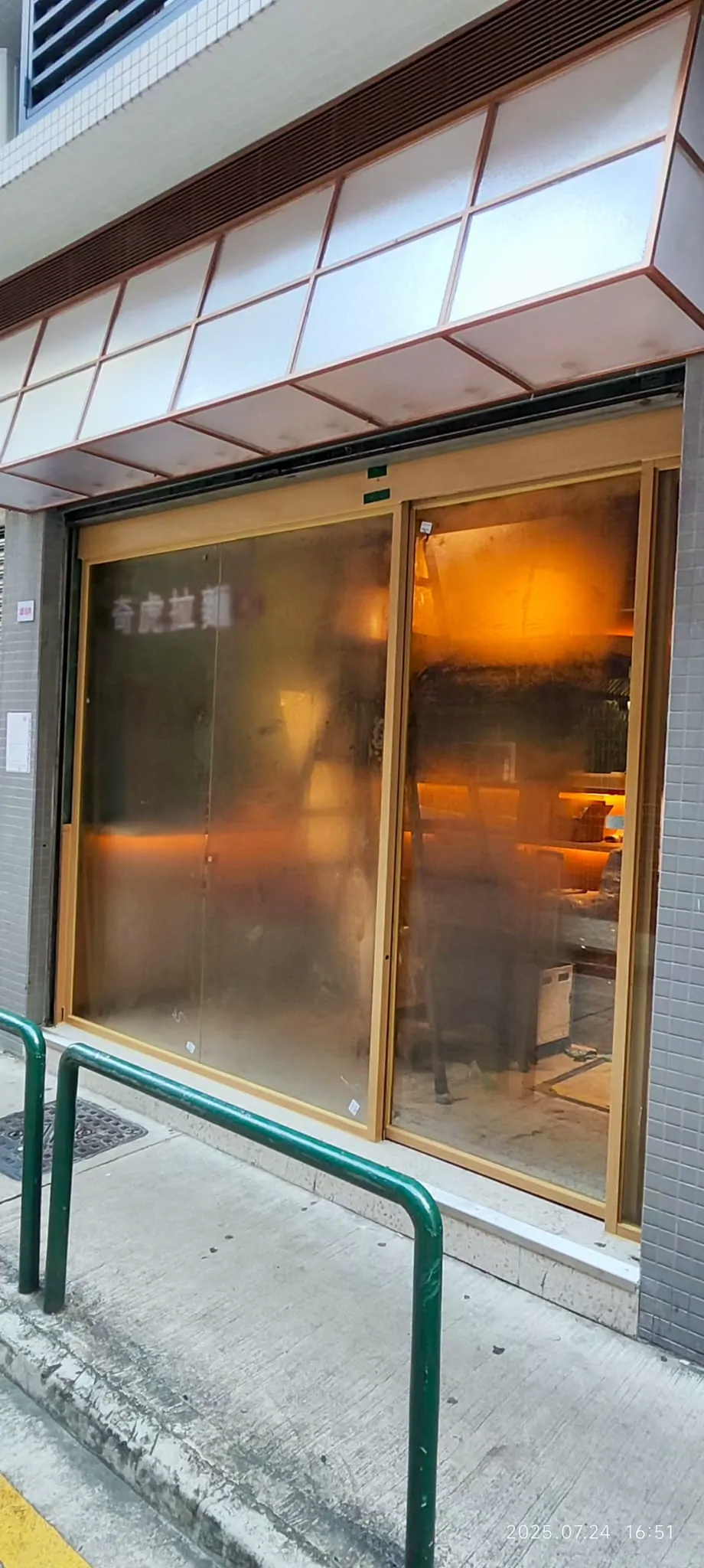
Gold-toned framed shopfront entrance illustrating how finish selection sits alongside door hardware and daily use.
Choose equipment for the workload
The operator should be matched to the door leaf weight, opening dimensions, expected frequency of use, surrounding environment, noise expectations and ongoing parts support. A lightweight glazed frontage with occasional customers places different demands on equipment from a busy convenience shop entrance that opens repeatedly throughout the day. A finish or slim visual profile should therefore be considered after, not instead of, confirming the mechanical and operational requirements.
Ask early how the door should behave during a power interruption, and whether access control, a backup power arrangement or any fire-linked operation is expected. These matters affect wiring, controls and the agreed operating logic, so they are easier to resolve during design than after the shop is fitted out. For a humid, coastal or otherwise corrosive location, discuss appropriate corrosion-resistant materials and surface treatments rather than assuming all visible metal finishes will perform in the same way.
- Choose the operator for leaf weight and opening size.
- Include traffic level, environment and noise expectations.
- Confirm spares and integration requirements early.
Keep appearance and reliability aligned
A tidy entrance supports both presentation and reliability. Clean the relevant sensing areas in accordance with normal safe housekeeping, keep the track surroundings free from grit, packaging and loose display material, and do not hang items from door equipment. Watch for new scraping, clicking, knocking or laboured sounds, especially if they begin after a change to signage, flooring, merchandising or cleaning practice. These changes are worth reporting before the door stops altogether.
When a fault is intermittent, note the time and conditions rather than repeatedly testing the door. A useful record might say that the door pauses only during wet weather, reacts after a busy period, or makes a sound near the end of travel. Send an entrance-wide photo, an operator label, visible indicator lights and a short video with sound. Remote review can help narrow the next checks, but it cannot replace on-site examination of alignment, moving parts, electrical condition, fixings or safety operation.
- Clean the sensing area and keep tracks clear.
- Listen for new scraping, knocking or straining sounds.
- Record the conditions when a fault occurs.
Common questions
Can an existing glass shop door be converted to automatic operation?
Not automatically. A clear glass entrance may suit a quieter shop with a suitable opening and adequate support, but the door leaf, glass specification, fittings, track space and supporting structure all need checking together. A visual preference is a useful starting point, not proof that an existing glass door can be converted safely or practically.
Can we disable a sensor when the door opens by itself?
It is not a good idea to turn off or obstruct a sensor simply because the door opens unexpectedly. First remove temporary displays, hanging signs or loose items close to the entrance, and observe from a safe distance whether the behaviour changes. Activation sensing and the safety sensing around the door zone have different jobs and cannot substitute for one another. A technician should assess persistent false activation.
What should I send for a remote first assessment?
Send one photo showing the whole entrance from inside or outside, a close photo of the operator label and indicator lights, and a short video with sound covering one complete opening and closing cycle. Also mention when the issue happens: all day, only in rain, only at busy times, or after a power interruption. These details help initial triage, but they do not replace an on-site check of movement, fixings, clearances and safety functions.
Send entrance photos on WhatsApp
If you are deciding between options or seeing a problem at an existing entrance, send us a WhatsApp message with a full shopfront photo, a close view of the door and fittings, and a short opening-and-closing video with sound. We can use those details to discuss sensible next checks.