
In Hong Kong shopfronts, offices, clinics and residential communal areas, a glazed entrance often needs to remain clear, practical and dependable through frequent use. Before discussing glass, establish what sort of door is involved: a sliding automatic door, a swing door, a fixed glazed screen with a moving leaf, or an existing manual glass door being considered for conversion. Similar-looking entrances can have very different support and fitting arrangements.\n\nThis guide helps you prepare useful information for an installation or maintenance discussion; it does not replace a site inspection, measurement or safety assessment. If a pane is cracked, chipped at the edge, visibly loose, rubbing heavily or making an unusual sound, avoid repeated operation. Keep people clear of the door area and arrange an inspection rather than trying to correct the issue by adjusting fittings yourself.
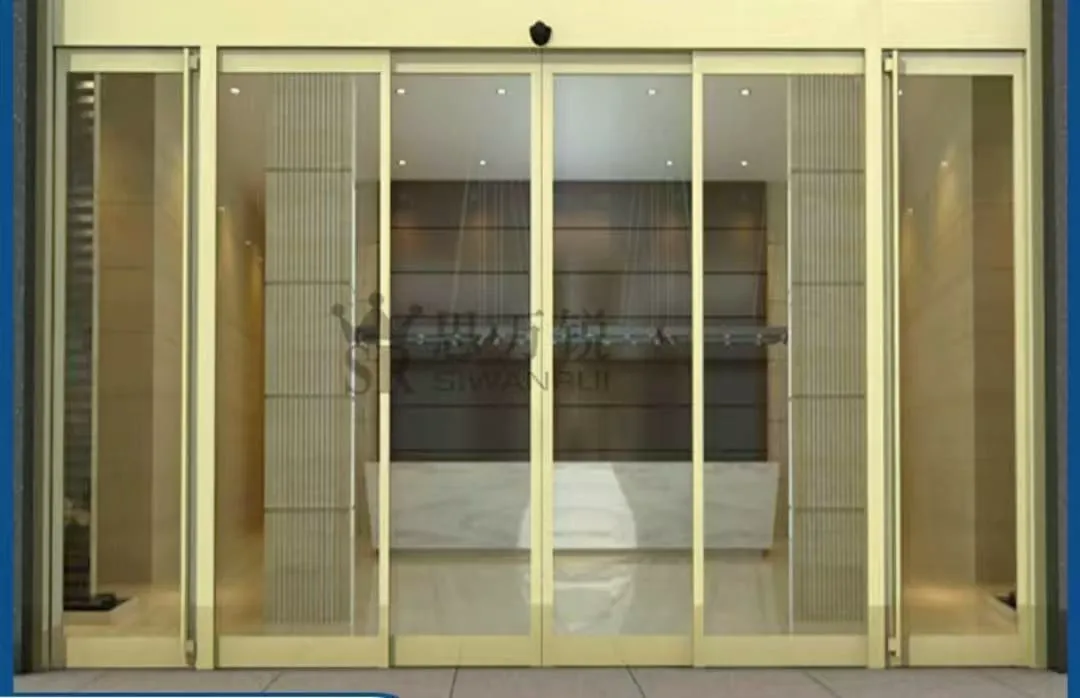
A framed shopfront glass entrance showing the relationship between the moving leaf, fixed glazing and overhead operator area.
Start with the door system, not a thickness figure
A glass door leaf is not simply a pane moving on its own. It is carried by items such as clamps, hangers, pivots, a frame or other glass fittings, and may be driven by an automatic operator. As the leaf becomes wider or taller, its weight and the way that weight is supported become more important. A thicker pane does not by itself make an existing hanger, clamp, operator or supporting arrangement suitable.
Record the approximate opening width and height, the size of the moving leaf, whether the arrangement is single- or double-leaf, and how often the entrance is used. For a sliding automatic door, operator selection should consider leaf weight, opening size, traffic frequency, environment, noise and continuing parts support together. That is a more useful starting point than asking for glass by thickness alone.
- Take a wide entrance photograph showing the moving leaf, fixed glass, frame and the position of any operator above it.
- Photograph the door fully open, including the space where the leaf travels or parks beside the opening.
- Where safely accessible, photograph the operator label and close-ups of visible glass fittings. Do not remove covers or loosen clamps.
Specify glass with its size, holes and edge details
A useful glass discussion includes more than a nominal thickness. It should cover the glass type, actual dimensions of each pane, weight, any required holes, and the position of those holes in relation to edges. Handles, locks, clamps and certain accessories may need to be fixed through or around the glass. Their positions and the fitting method affect what can be arranged, so they should not be left to a last-minute visual decision at installation.
The visible finish also deserves a practical conversation. Clear, frosted and patterned treatments can affect sightlines, privacy and how easily users notice the door. Frosted glass may suit an office or clinic where daylight and some privacy are both wanted. Even then, appearance is only one part of the decision: the moving leaf weight, method of fixing accessories and cleaning needs still have to work together. A pane that merely looks substantial is not, on its own, proof of a suitable or durable arrangement.
- Measure the visible width and height of the glass, noting whether the measurement sits within a frame.
- Photograph handles, locks, clamps and any holes from the front and, where possible, from the side.
- If old glass documentation or a readable marking is available, provide a photograph. Do not guess the glass type when it cannot be confirmed.
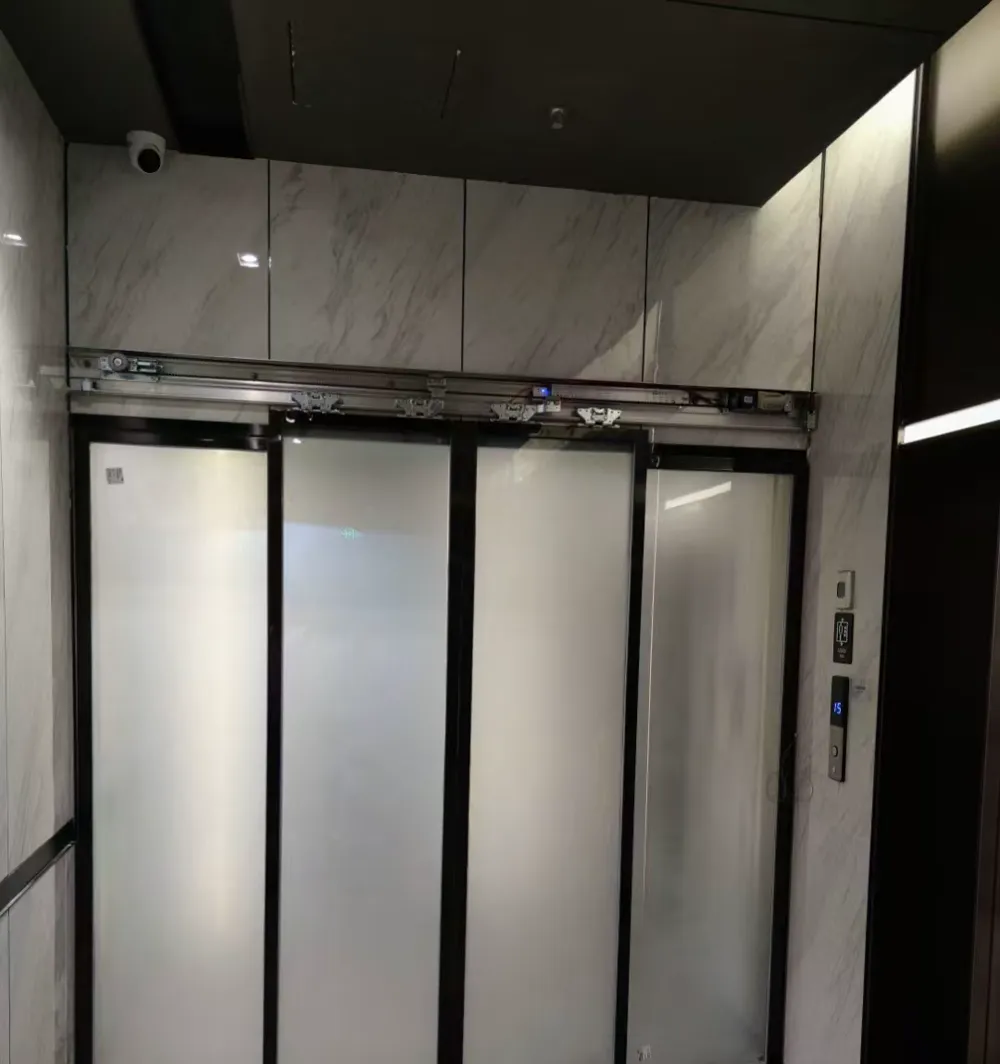
A frosted framed sliding door illustrating how privacy finish, framing and glass-door use need to be considered together.
The entrance environment changes the material discussion
A street-facing shop entrance may receive rain, dust and constant traffic. A clinic or office may place more emphasis on quiet operation, privacy and a controlled opening rhythm. In coastal, damp or higher-corrosion-risk locations, the discussion should include suitable corrosion-resistant materials and surface treatments as well as the pane itself. Replacing only the glass while overlooking connected fittings and fixings can leave the environmental issue unresolved.
Look for standing water, repeated water marks, signs of corrosion around fittings, cleaner residue, or dirt gathering around the track and door bottom. None of these observations proves that the glass is at fault, but they give useful context for a site visit. Routine cleaning of sensor areas, keeping the track vicinity clear of debris and noticing unfamiliar sounds can help identify an emerging problem earlier.
- Take one overall image from inside and one from outside, showing the floor, weather exposure and any canopy or shelter.
- Photograph fittings, the lower edge of the door and the track area where moisture, debris or surface changes can be seen.
- Note whether the issue is more common after rain, during busy periods or at a particular time of day.
For a conversion, check whether the existing door can be adapted
An existing glass door cannot always be converted directly into an automatic door. The door leaf, load-bearing arrangement, available track space, frame and glass fittings all need inspection. It also matters whether the existing entrance is a manual swing door, a sliding arrangement or a fixed glazed screen with a separate moving leaf. Two entrances may look alike from the pavement while having different overhead space, internal support or door-leaf condition.
If access control, backup power or fire-interface functions are planned, the intended passage behaviour during a power failure and the relationship between the systems should be confirmed at the design stage. Escape, accessibility, fire and structural safety matters require confirmation against the actual site and relevant professional requirements. General online guidance should not be treated as approval for a conversion or as a substitute for checking the final arrangement.
- Photograph the top, sides and floor line of the door, including the relationship with the ceiling or soffit.
- Photograph existing locks, card readers, push buttons, sensors and any manual opening hardware.
- Explain whether manual passage must remain available and what passage behaviour is expected during a power interruption.
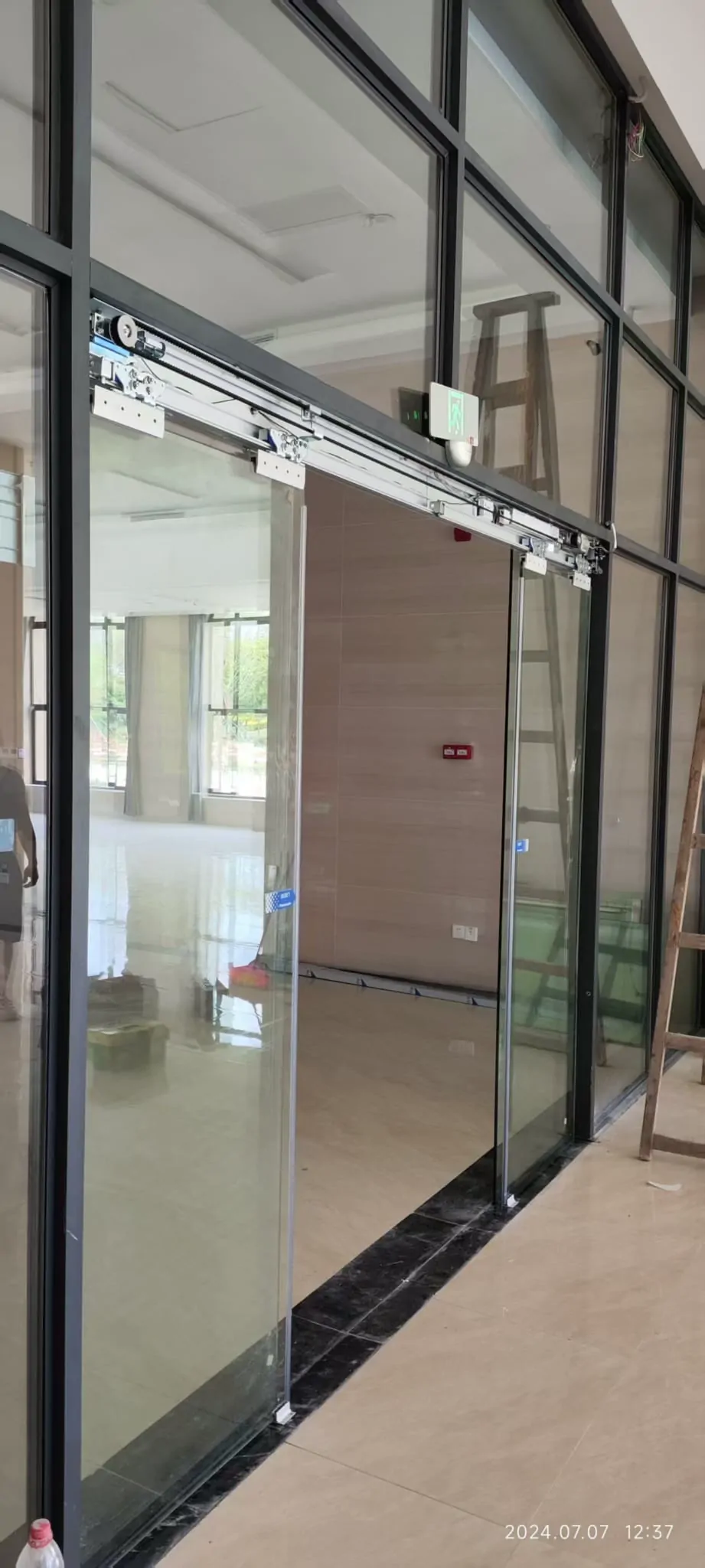
A close view of an automatic-door operator and glass-door components, useful for identifying labels, fittings and maintenance check areas.
Use photos and video for an initial view, with clear limits
Where a working door starts to stick, run out of alignment, stop part-way, or make a rubbing sound near the glass, begin with observations that do not require dismantling anything. Check whether debris is near the track, whether objects are blocking a sensor area, and whether there are obvious marks of impact or loose-looking fittings. Do not put hands into the path of a moving leaf, the track or the operator to test the mechanism.
An initial maintenance view can be helped by an overall entrance image, the operator label, indicator lights and a short opening-and-closing video with sound. Film one complete cycle from a safe distance and say whether the fault happens every time or only occasionally. These materials can help identify what needs checking first, but they cannot reveal internal wear, hidden fixings or the condition of the supporting structure. A remote view is therefore not a final diagnosis.
- If there is a crack, chipped edge or clearly unstable leaf, stop using that door and keep the immediate area clear.
- Keep people outside the leaf travel path while recording; do not follow the moving leaf closely with a phone.
- Include when the problem began, whether there was an impact, and whether fittings, access control or nearby finishes were recently changed.
Common questions
Is thicker glass always better for an automatic door?
No. A thicker pane may add weight and change what the operator, hangers, clamps and supporting arrangement must handle. Glass type, dimensions, weight, holes, environment and the complete fitting system should be reviewed together.
Can an existing glass door simply be converted to an automatic sliding door?
Not always. A site check is needed for the door leaf, load-bearing arrangement, track space, frame and glass fittings. The intended access control, backup power, fire interface and power-failure passage behaviour also need early confirmation.
What should I send for an initial assessment?
Send an overall entrance photograph, views of the top and track area, the operator label, close-ups of fittings and holes, and a complete opening-and-closing video with sound. If there is a fault, say when it occurs and whether the door has been hit or altered recently.
Would you like an initial view of your glass door arrangement?
Send overall entrance photos, close-ups of the glass fittings and a short opening-and-closing video with sound by WhatsApp. We can help identify the next inspection points from what is visible.