
An automatic shop entrance is more than an operator fitted above a glass door. Opening width, daily footfall, door weight, wind exposure, access control and the way customers move through the entrance all affect the right configuration. A good selection sequence usually produces a more reliable and serviceable door.
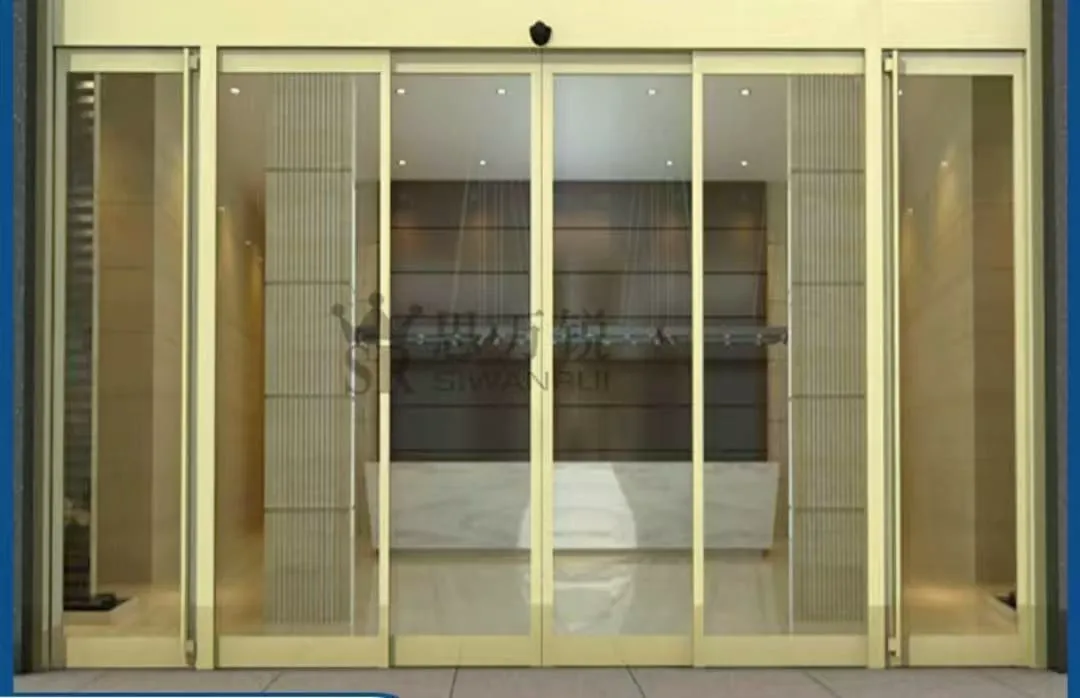
A framed sliding entrance integrates the fixed glass, moving panels, activation sensor and perimeter finishing into one assembly.
Answer four questions before choosing an operator
Retail customers, office staff, clinic patients and goods deliveries require different opening speeds, clear widths and controls.
A low-use doorway and an entrance running continuously through peak hours should not be assessed against the same duty requirement.
Before retaining existing glass doors, check their weight, support, frame, rail position and available travel space.
Card access, keypads, mobile credentials, backup power, fire requirements and emergency egress should be considered at the design stage.
Choose the opening type before the brand
Automatic sliding door
The most common format for shops, offices and lobbies. The panels move sideways and keep the approach clear, but there must be enough space beside the opening to store the moving panels.
Telescopic sliding door
Where the frontage is restricted but a wider clear opening is needed, multiple panels can stack as they slide. The arrangement is more complex and must be designed around the opening.
Automatic swing operator
Some existing hinged doors can be automated without rebuilding the complete entrance. Door weight, opening direction, fixing structure and the swing path must still be checked.
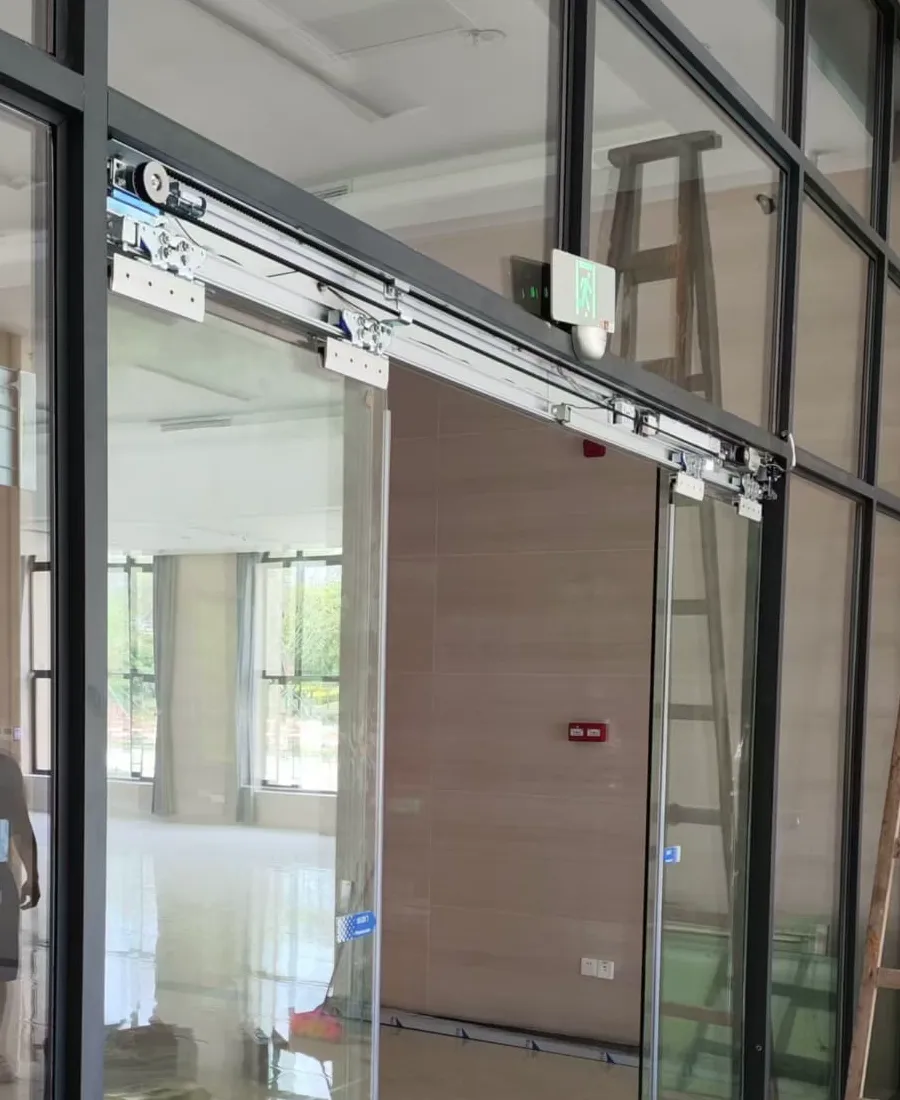
With the cover removed, the operator, rail, hangers and controls are visible. Load capacity and future inspection space should be planned together.
How should the operator be selected?
Brand is only one factor. Total door weight, opening width, daily operating cycles, movement speed, noise and the availability of parts and service support in Hong Kong matter just as much.
Typical shop entrance
The priorities are usually reliable movement, smooth operation and straightforward maintenance. A quiet site may not need the highest duty level, but safety sensing should not be omitted.
Busy lobby or long trading hours
Pay greater attention to continuous operation, load capacity, heat management, noise, parts support and planned maintenance—not only the product name.
Clinic, care facility or accessible entrance
Hold-open time, detection coverage, low-speed movement and anti-trap protection should be adjusted for users who may move more slowly.
How should glass and frames be specified?
Glass is not selected by thickness alone
Glass type, panel size, total weight, hardware cut-outs and location need to be considered together. Toughened and laminated glass are common options, but the final specification should follow the door design and site safety requirements.
Frameless glass doors
They give a clean, open shopfront, but glass fittings, floor level, panel stability and finishing details must be accurate.
Aluminium or stainless-steel frames
Framed doors can make it easier to integrate seals, locks and larger panels. Aluminium or 304 stainless steel may suit many indoor locations; coastal, wet or corrosive sites should be assessed for a more corrosion-resistant specification.
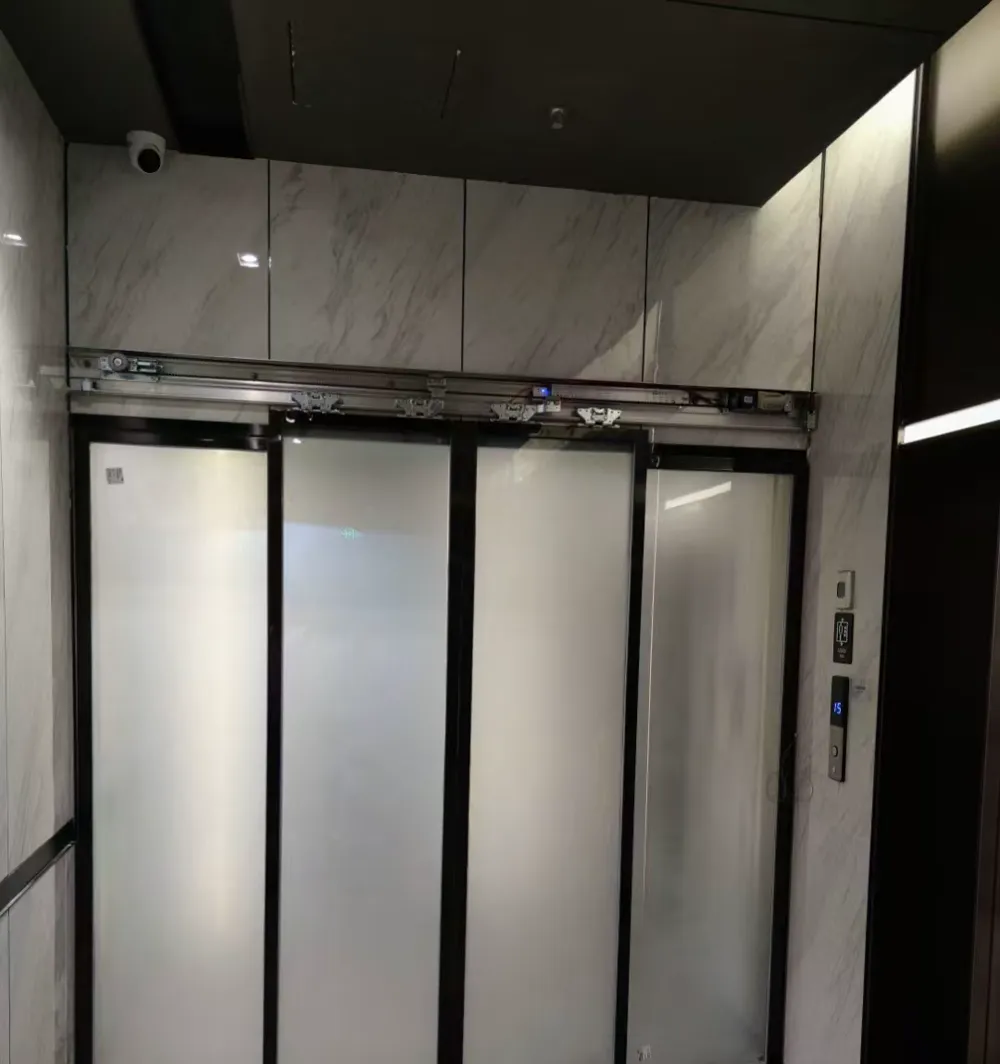
A metal frame with frosted glass can combine privacy, panel stability and a coordinated interior finish for public or functional areas.
Which safety features should not be overlooked?
An activation sensor tells the door that somebody is approaching. A safety sensor protects the closing and travel area. They perform different jobs, so a basic approach sensor should not be treated as complete anti-trap protection.
Adjust the detection field for the direction and speed of traffic to reduce false opening and late response.
Monitor the moving and closing area, particularly where children, older people or trolleys use the entrance.
Confirm whether the door should unlock, open, remain closed or allow manual passage during a power failure, in line with site and fire requirements.
What should you prepare for the first enquiry?
You do not need to identify the operator model yourself. The following is normally enough for an initial assessment:
For an existing faulty automatic door, also photograph the operator label and control indicators, then record a short opening-and-closing video with sound. This helps separate sensor, door, power and operator problems.
Common questions
Does automation always require a complete new glass entrance?
No. Some existing door sets can be retained, but their weight, structure, rail space and glass fittings must first be confirmed as suitable for powered operation.
Are frameless glass doors right for every shop?
No. A wide opening, wind exposure, sealing, locking or intensive use may make a framed door the better option.
Does an entrance sensor mean the door cannot trap someone?
Not necessarily. Activation sensing and door-area anti-trap safety perform different functions and should be specified for the chosen door type and users.
Can an automatic door connect to card or mobile access?
Usually, yes. The control logic, locking, request-to-exit device, fire interface and power-failure behaviour should be agreed before installation.
Not sure which entrance arrangement fits your site?
Send entrance photographs, approximate dimensions and the type of premises on WhatsApp. An engineer can first identify the appropriate door type and the points that need attention.