
Frosted glass is a visual treatment, not a complete answer to privacy, door safety or suitability for automation. Start with the purpose of the doorway: a main entrance, an internal division, or a controlled-access threshold. Then consider the door leaves, available track space, approach routes, sensors and surrounding light. Photographs and video can help with an initial discussion, but they cannot confirm hidden structure, glass details or the final arrangement on site.
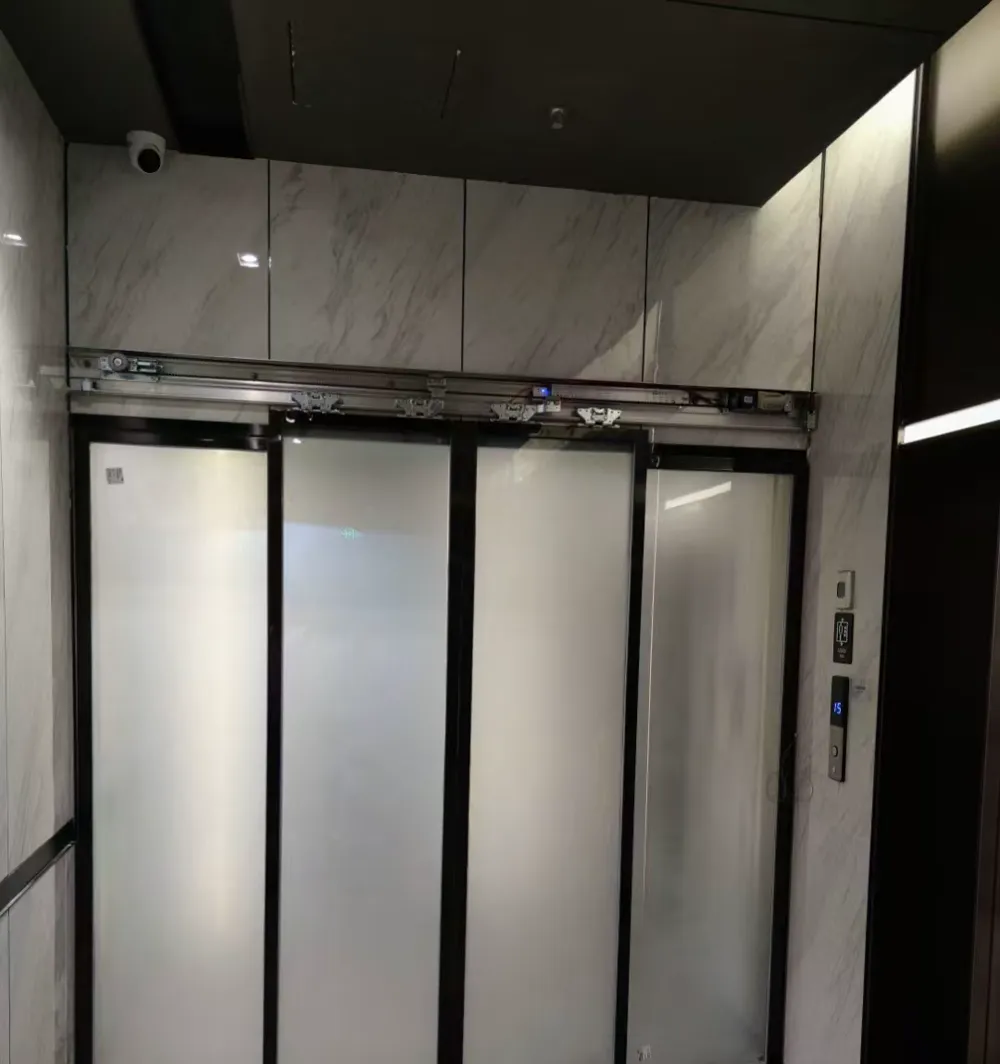
A framed frosted-glass sliding door showing an entrance arrangement that combines daylight with screened views.
Places where it tends to work well
Frosted glass is particularly useful where a space needs daylight but does not need to be on full display. In an office, it can separate reception from desks, meeting areas or back-of-house circulation while keeping the entrance lighter than an opaque partition. An automatic sliding arrangement may also be helpful where a swing door would take up corridor space, provided the available opening and clear passage are suitable for the intended users.
Clinics, treatment-area approaches, residential estate communal interiors and transitions between a shop floor and a staff area can have similar needs. In each case, however, the question is not simply whether people should be able to see through the glass. Decide what should be obscured: seated occupants, paperwork, a work area, or only direct sightlines from the corridor. That distinction affects the chosen glass treatment and whether a clear viewing area or additional door marking is helpful.
- Well suited to internal entrances needing light and a degree of visual separation.
- Consider carefully where merchandise, wayfinding or a clear view beyond the door is important.
- For controlled entries, plan access devices and user routes alongside the door from the outset.
Set a privacy brief before choosing the finish
The word “frosted” does not describe one fixed level of privacy. What can be seen through a treated pane varies with the finish, the distance from the glass, the angle of view and, importantly, the balance of light on each side. A doorway that appears suitably private in bright daytime conditions can show stronger silhouettes after dark when the interior is lit. It is sensible to view a sample or comparable finish from both sides at the times the entrance is actually used.
Light needs managing as well as admitting. A bright exterior behind a frosted door may reduce glare in one direction but still create reflections at a reception desk or on nearby screens. Heavy visual obscuring can also make a narrow internal passage feel enclosed. Write down which views need screening, which direction people approach from, and whether staff need a partial view of the threshold. This gives a clearer basis for deciding on the glass appearance, door markings and layout.
- Check the intended effect in both daytime and evening lighting.
- View the glass from the normal waiting position, not only at close range.
- Identify any area that must remain visible for orientation or day-to-day operation.
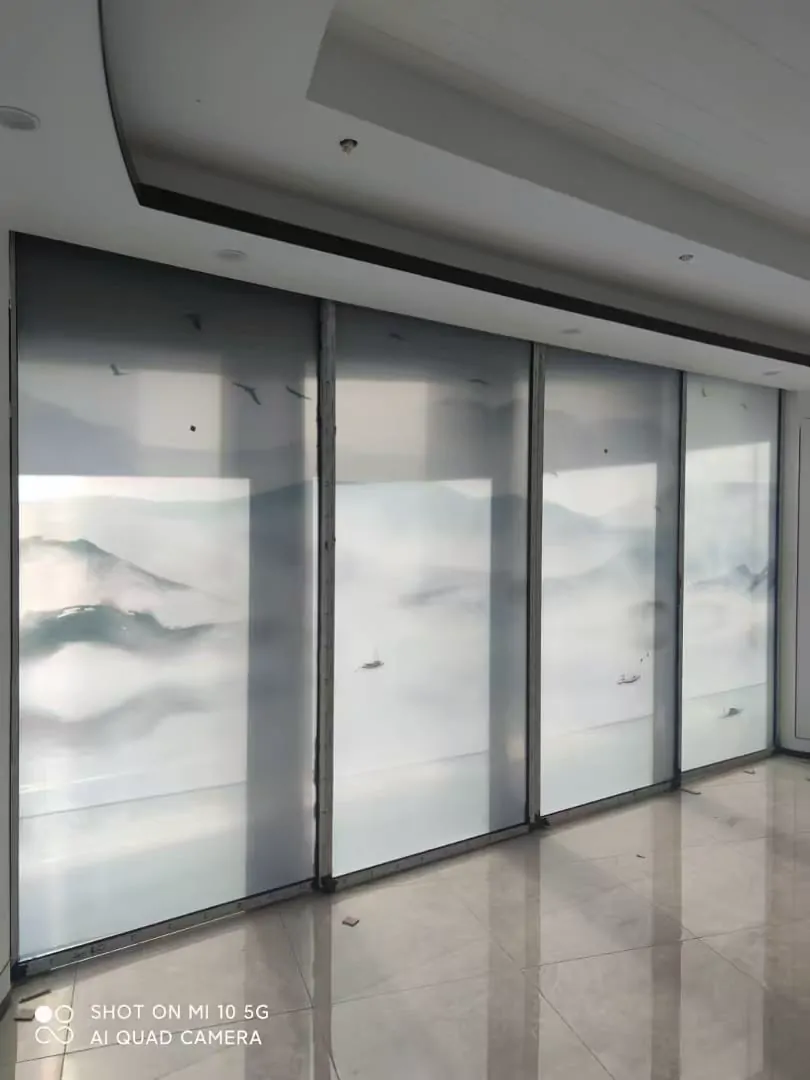
A decorative glass surface illustrating that visual treatment and privacy performance should be assessed separately.
Opening sensors and door-zone safety are different
An activation sensor detects an approaching person or object and sends a signal to open the door. A door-zone safety sensor has a different job: it monitors the area in which the leaves move. One does not replace the other. The fact that a door opens automatically does not establish that the moving-door area has been addressed appropriately. With frosted leaves, clear visual identification of the doorway and its operating movement becomes especially useful because people cannot rely on a full view through the opening.
There are safe observations a building user can make without touching the equipment. Notice whether the door responds consistently as people approach from the expected routes, whether it behaves differently when someone pauses in the threshold, and whether there is rubbing, jolting or unexplained hesitation during travel. Do not test a closing door with hands, feet, umbrellas or objects, and do not alter sensor settings. If the door repeatedly reopens, fails to close fully or appears to create a contact risk, avoid forcing use and arrange an inspection.
- Activation sensing starts the opening cycle at an appropriate approach point.
- Door-zone safety sensing addresses the moving area and has a separate purpose.
- Observe routes used by children, older people, wheelchair users and people with trolleys.
What to check before automating an existing glass door
An existing manual glass door cannot automatically be assumed suitable for conversion. The door leaf, supporting conditions, room for a track or operator, frame, glass hardware and any holes in the glass all need checking. A manual door may have been designed around a different load path or a different set of fittings from those needed for reliable automatic operation. A front-on photograph rarely reveals the details that decide whether adaptation is practical.
Useful information includes photographs with the door both open and closed, a view above the opening, the floor area, both sides of the opening and the fixed glass or wall beside it. Include visible clamps, handles, pivots or hanging gear. A wider image should also show ceilings, signs, finishes or nearby equipment, because these can affect where an operator or track could sit. Approximate opening dimensions are useful, but they should be treated as initial information rather than a final measurement.
- Photograph the whole doorway in its open and closed positions.
- Show the top edge, floor line, glass edges and visible hardware.
- Record the approximate width and height, plus space to either side and above.
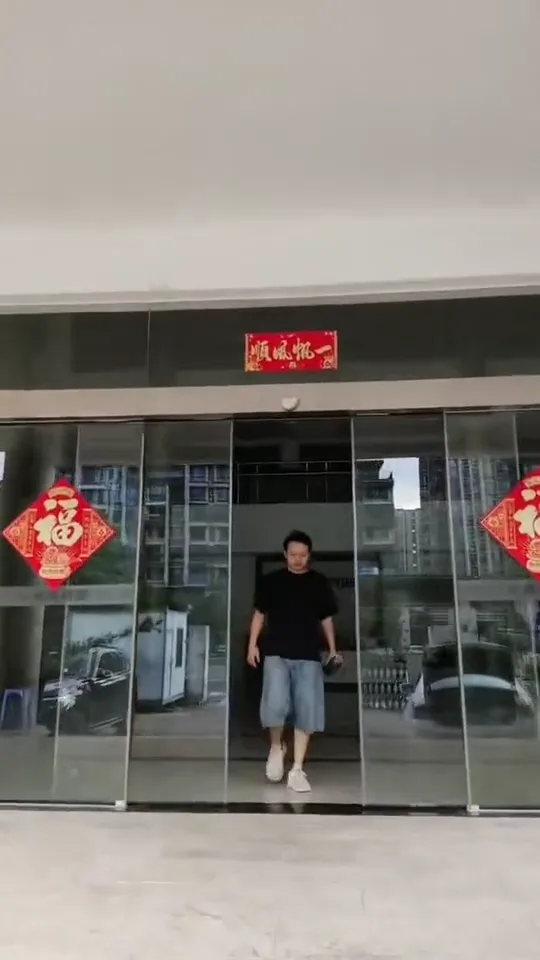
An office automatic-door testing scene showing that sensors, moving leaves and access-control positions need coordinated planning.
Choose the operator around the actual environment
The operator should be selected around more than the opening size. Door-leaf weight, dimensions, traffic frequency, noise expectations, exposure to weather and future parts support all matter. Frosting changes the look of the glass; it does not remove the need to account for the combined weight and operating conditions of the glass, frame and hardware. A doorway used occasionally indoors is a different operating situation from one serving a busy public route throughout the day.
Locations near the coast, open corridors, wet cleaning areas or other damp and corrosive conditions deserve particular attention to corrosion-resistant materials and surface treatments. Think too about daily housekeeping. If leaves, grit, trolleys or cleaning items regularly reach the track area, the entrance should allow that area to be kept clear. A tidy, accessible route around the door is often more significant for dependable daily use than a finish selected from a photograph.
- Explain whether the entrance is exposed to rain, humidity, wind or coastal conditions.
- Describe peak traffic and any trolleys, large items or assisted users.
- Confirm that the operator and track will remain safely accessible for servicing.
Useful routine checks and information for an initial enquiry
For routine care, keep the sensing area clean and keep boxes, umbrella stands, cleaning tools and loose objects away from the track and threshold. Listen for a new scraping sound, vibration, uneven movement or a door leaf that appears out of line. Clean only surfaces that can be reached safely. Do not remove an operator cover, loosen glass hardware or spray liquid towards electrical parts. These are sensible observations, not a substitute for examining a fault.
For an initial maintenance discussion, the most useful material is a wide view of the entrance, a legible photograph of the operator label, a clear image of any indicator lights and a short video with sound covering one full opening and closing cycle. Film from a safe distance and say when the problem occurs, whether it happens every time, and whether anything changed around access control, power supply or the surrounding entrance. This can narrow down likely areas for attention, but remote material cannot confirm the cause or replace a site inspection.
- Wide view: doorway, floor, sides and the approach route.
- Close views: operator label, indicator lights, visible hardware and the affected area.
- Video: one complete cycle with sound, recorded from a safe position.
Common questions
Will frosted glass completely hide what is behind the door?
Not necessarily. The result depends on the particular finish, lighting, distance and viewing angle. Interior lighting after dark can make silhouettes more visible than they are in daytime. If privacy is important, define whether the aim is to obscure people, workstations, documents or a particular room zone, then assess the effect in the actual lighting conditions before settling the arrangement.
Can an existing office glass sliding door be made automatic?
It may be possible, but the answer cannot be taken from the front appearance alone. The glass leaf, support, track space, frame, holes in the glass and existing fittings must all be checked. Send images of the door open and closed, the top and side clearances, visible hardware and approximate dimensions for an initial view. Final suitability still depends on the site.
Does frosted glass affect automatic-door sensing?
Sensor layout and protection of the moving-door area should be considered as part of the complete door system, rather than judged simply by whether the glass is frosted. Activation sensing and door-zone safety sensing serve different functions. Keep the sensing area clear, observe any unusual behaviour without interfering with the door, and have abnormal operation checked rather than trying to adjust the equipment yourself.
Want a practical first view of your entrance?
Send a WhatsApp photo of the full entrance, the existing glass hardware or operator label, and a short video with sound if the door is already operating. We can help identify the site details worth checking next.