
Stainless-steel framing is common around glazed automatic doors in Hong Kong shops, offices, clinics, residential developments and shared public entrances. It can give a clean, durable-looking edge to glass, yet its real importance is practical: it forms the interface between the door system and the wall, ceiling, floor, access-control wiring and decorative finishes. A frame that looks right on a drawing may still be awkward to clean, difficult to service or poorly suited to a damp entrance. The useful question is therefore not simply which finish looks best, but how the completed doorway will operate and age in its actual setting. This guide sets out the observations, safe checks and decisions that help before installation, replacement or conversion work.
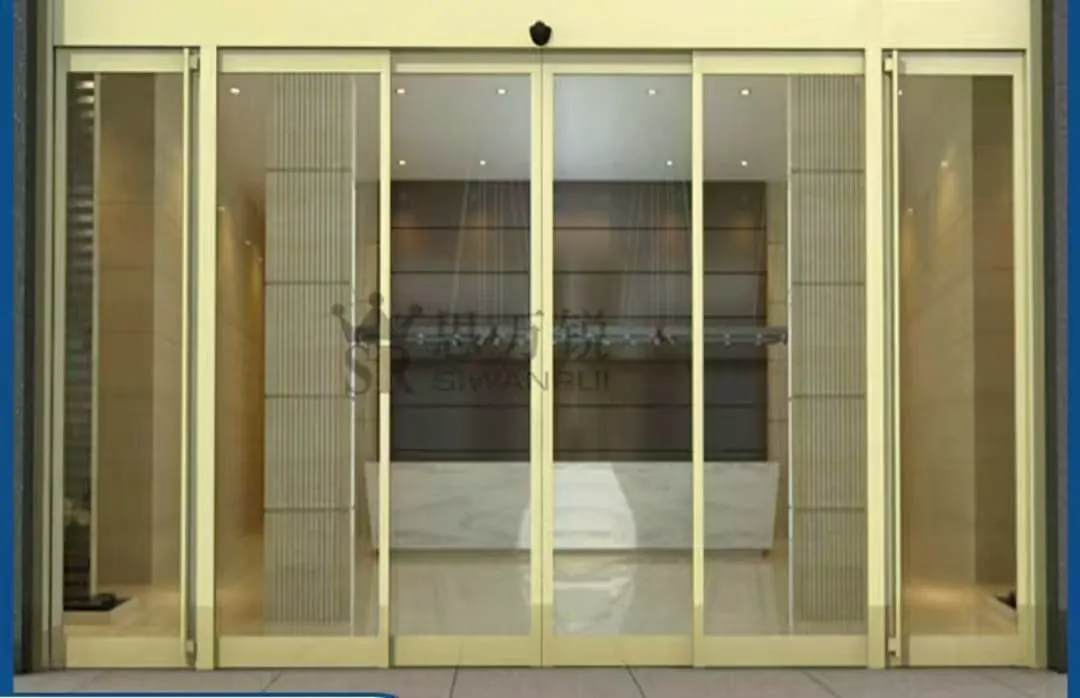
A stainless-steel-framed glazed automatic doorway, showing the head member, glass interfaces and surrounding finish lines.
Assess the entrance exposure before choosing the material detail
Begin by looking beyond the simple labels of indoor and outdoor. A doorway beneath a canopy may still receive wind-driven rain, moisture from umbrellas, air-conditioning drips or frequent wet cleaning. A covered walkway, podium entrance or location near the coast may be exposed to damp or corrosive conditions even when it does not look fully external. In such settings, the appropriate corrosion-resistant material and surface treatment should be assessed for the real exposure, including where water can collect around the frame, glass channel and wall junctions.
A useful safe check is to inspect the entrance after rain or routine cleaning. Look at the lower frame, glass edges and floor junction for water marks, brown staining, pale residue, standing water or corners that remain damp. None of these observations proves the cause by itself, but they identify areas worth reviewing for water management, cleaning residue or surface damage. Avoid using abrasive pads or strong acidic or alkaline cleaners on stainless-steel surfaces; they can leave scratches or worsen a surface issue rather than solve it.
- Take one wide photo from outside, including the canopy, floor and nearby drainage direction.
- Take close photos of the frame base, glass channel and wall edges, especially where marks are visible.
- Explain whether the opening receives direct rain, is near the coast, or is frequently wet-cleaned.
Treat the frame as part of the door assembly, not as trim
An automatic-door operator should be selected with the leaf weight, opening size, frequency of use, environment, noise and parts support in mind. The frame needs to accommodate that arrangement, with suitable positions for installation and future access. The glass type, dimensions, weight, holes, fittings and intended environment also need to be considered together. Glass thickness on its own does not establish whether a particular frame, fitting or operator arrangement is appropriate.
Watch the door in normal use from a safe distance. Scraping near the frame, a leaf that appears to wobble, uneven gaps between glass and metal, or an unusual sound at the end of travel are all reasons to arrange a proper review of the track, rollers, fixings and glass ironmongery. Do not adjust load-bearing screws, remove the operator cover or drill beside glass as a do-it-yourself response. A small visible symptom can relate to more than one part of the assembly.
- Provide approximate opening width and height, number of leaves and opening direction.
- Photograph the door fully open and fully closed, plus the operator or head member above it.
- Capture any visible operator label, indicator lights and the frame-to-wall interfaces.
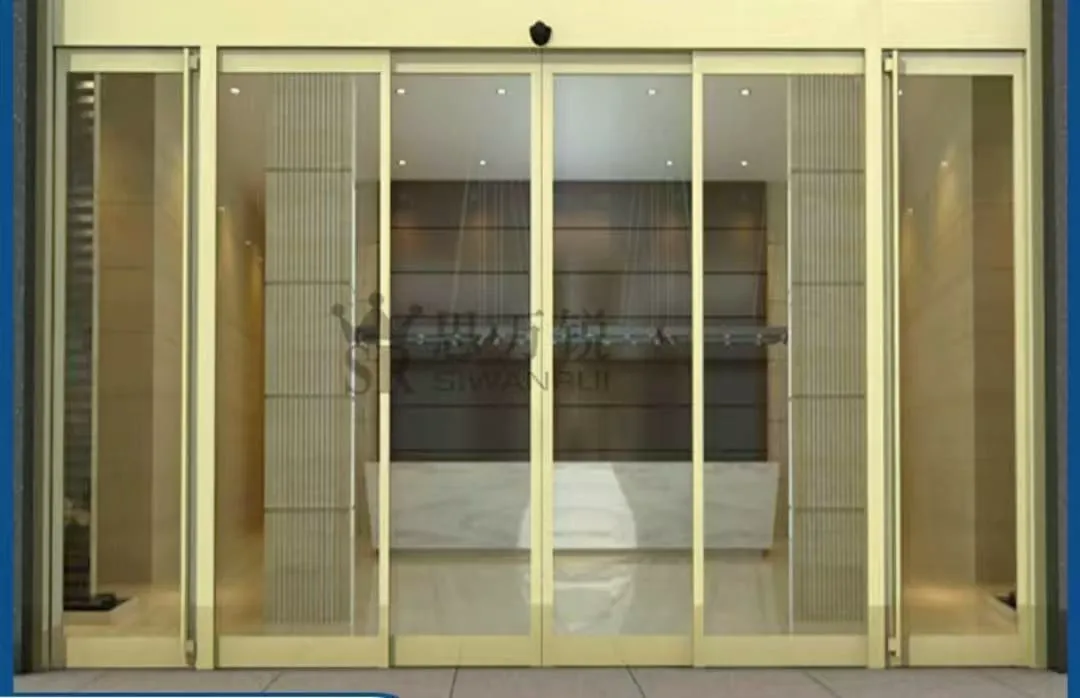
A framed shopfront entrance, useful for viewing the opening, floor junction and exposure around the doorway.
Choose finish and junctions for cleaning as well as appearance
Mirror, brushed, matt and coloured stainless-steel finishes can create very different impressions, but each also reveals fingerprints, water marks, scratches and later repairs differently. A busy shop entrance may be subject to umbrellas, trolleys and cleaning tools at low level. A clinic or office reception may be more sensitive to reflections, lighting and how clearly the glass reads. View samples under lighting similar to the entrance whenever possible, rather than relying only on a phone image or a sample board viewed elsewhere.
The junctions deserve equal attention. Check the lines where the frame meets stone, tiles, painted walls, ceilings, floors and glass. Consider straightness, accessible cleaning, sealant edges and whether a recess will trap dust. Chasing an entirely seamless appearance can also make later access to equipment or replacement of a component harder. Before work begins, it is sensible to agree visible finishing lines, access-cover positions and access-control cable exits on drawings or at the opening itself.
- Photograph the frame obliquely so reflections, dents and scratches can be seen.
- Show the junctions with ceiling, floor, side wall and glass.
- If refurbishment is under way, say which wall and floor finishes are not yet complete.
Plan sensors, access control and power behaviour together
An activation sensor detects an approaching user and sends an instruction to open the door. A door-zone safety sensor is intended to detect people or obstacles in the movement area of the leaves. They perform different functions and cannot replace one another. When framing is being designed, confirm that sensor positions will not be screened by metalwork, signs, lights, glass reflections or decorative items, and that there is a sensible route for cables and future servicing.
Where the entrance includes access control, backup power or an interface with a fire system, the access arrangement during a power interruption and the relevant interfaces should be agreed during the design stage. Fire safety, escape, accessibility and structural safety require case-specific confirmation against the actual site and relevant professional requirements; this article offers general principles only. If the door repeatedly reverses, fails to detect a person, traps on an obstruction or affects an escape route, reduce use and arrange inspection rather than experimenting with sensor settings.
- Photograph each sensor facing forward, including signs, lighting and planting within its view.
- State whether access control, backup power or another building system is involved.
- Record a short video with sound from approach through opening and closing.
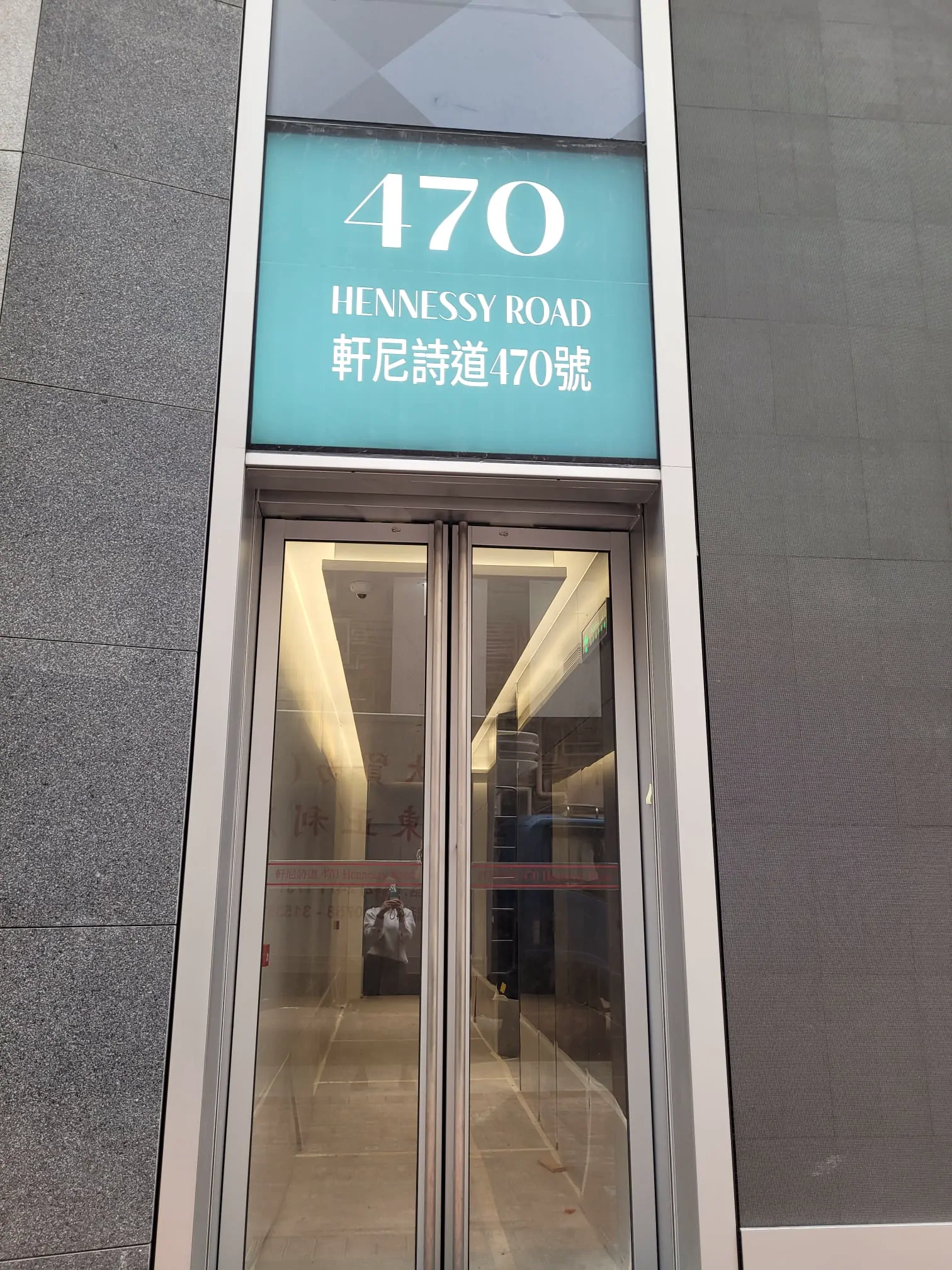
A commercial glazed entrance where the overall view helps assess sensor sightlines and nearby obstructions.
For a conversion or refresh, establish what the existing doorway can support
When an existing glass door is being considered for automatic operation, first establish whether the present leaves can remain, whether there is adequate headroom for track and operator equipment, whether usable support is available at the sides or above, and whether existing glass fittings limit the change. A door that still opens manually is not automatically ready for conversion. The glass, support arrangement, fixing points, opening dimensions and available service space need to be assessed as one system. Avoid removing leaves, closing off access panels or ordering a finished surround before feasibility has been checked.
For day-to-day care, keep the sensor zones clean, keep the track area free of grit, paper, umbrella sleeves and renovation debris, and note unusual rubbing sounds, vibration, changes in closing behaviour or a feeling that the frame has become loose. Remote triage is more useful when it includes a wide entrance view, an operator label, indicator lights and a short opening-and-closing video with sound. It cannot replace measuring the opening, examining fixings and glass condition, or testing safety functions on site.
- Send a full entrance view, all four frame corners, the threshold or track area and the operator above.
- Film the whole leaf travel from the side and include sound.
- Describe when the issue began, whether it is worse in wet weather and whether recent refurbishment or fitting changes took place.
Common questions
Is a stainless-steel frame suitable for every glazed automatic door?
No. The glass type, size, weight, holes, fittings, opening, supporting arrangement and exposure all affect what is workable. A frame may protect edges and provide a neat finish, but it does not replace checking the leaf support, track space and fixing method.
Does staining or small rust-like spotting mean the whole frame must be replaced?
Not necessarily. First consider the source of moisture, cleaning practice, trapped water, contact with nearby metals and any surface damage. Photos may help identify the areas that need attention, but appearance alone cannot establish the cause or the state of concealed parts.
Can sensors be hidden inside stainless-steel framing?
It depends on the sensor type, detection area, possible screening by the frame, glass reflections and cable route. Activation sensing and door-zone safety sensing must be considered separately. A cleaner appearance should not reduce the safety coverage or make servicing impractical.
Want to check the doorway before deciding?
You are welcome to send WhatsApp photos of the full entrance, frame junctions, operator label and a short door video with sound. We can use them for an initial view; support, glass, safety sensing and system interfaces still need confirmation at the site where relevant.