
An automatic door that starts making a different sound is giving useful information, but the sound alone rarely identifies the failed part. A soft, unchanged motor sound may simply be familiar background noise; scraping, clattering, grinding or a sharp impact deserves closer attention, particularly in a busy shop, office, housing-estate lobby, clinic or shared entrance.
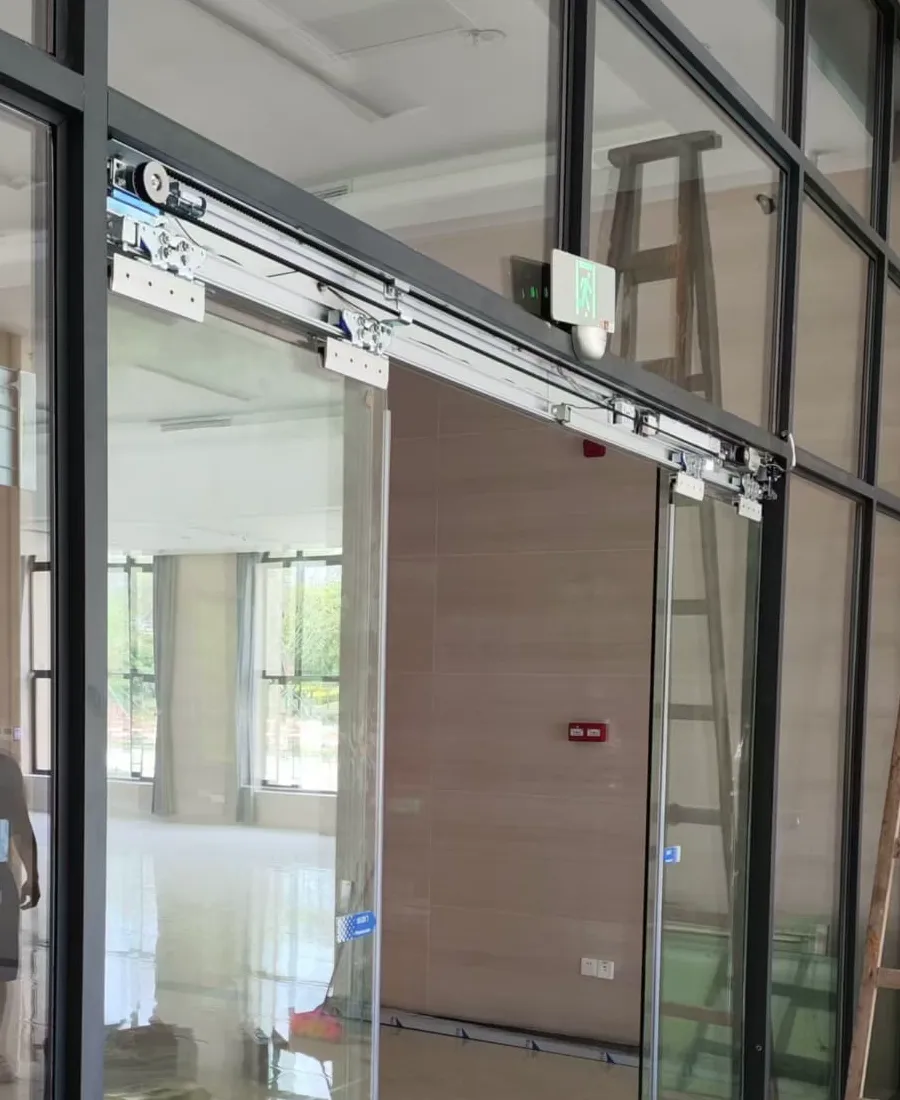
Automatic-door operator and rail components visible above a sliding entrance.
Start with the pattern, not a guess
First establish what has changed. A noise that has been present at the same low level for years is different from a new sound that appears every morning, only during closing, or only when the entrance is busy. Listen for a smooth hum, a rolling or clicking sound, intermittent rubbing, a high-pitched squeal, grinding, or a single knock at the end of travel. Also watch whether the door moves evenly or hesitates at the same location. The timing is often more informative than a description such as “it sounds loud”.
A sound may be made above the doorway at the operator, along the track or rail, near the moving glass leaf, or where the leaf meets another panel, frame or floor guide. A wide view can help distinguish these areas. Do not assume that a sound from the top cover means the motor is at fault: vibration can travel through the frame and make its source difficult to judge. Remote observations can narrow the discussion, but an inspection is needed to identify the component and condition reliably.
- Note whether the noise occurs on opening, closing or at the same point in both directions.
- Look for a change in speed, shaking, rubbing marks or an uneven gap around the moving leaf.
- Keep the rail area and doorway free of boxes, mats, rubbish and loose fitting-out materials.
Signs that should not wait
Treat the combination of abnormal noise and changed movement as more urgent than noise by itself. Grinding can indicate contact or wear in moving parts; a hard knock may occur when a leaf reaches a point it should not; repeated impacts can place further stress on the system. If the door starts to shudder, move in short steps, rub against surrounding parts or close with a noticeably different action, continuing to run it can make diagnosis harder and may worsen the condition.
The entrance has to be considered as a working route, not only as a machine. In a clinic, lobby or shop, people may approach quickly, push a trolley through, or expect the door to open without hesitation. Do not rely on a noisy door to remain predictable. If the sound is accompanied by unreliable detection, unexpected movement, poor stopping, visible damage or a possible obstruction to an escape route, use an alternative safe arrangement where available and arrange an inspection promptly. Fire, escape, accessibility and structural matters need confirmation against the particular site and relevant professional requirements.
- A grinding, repeated banging or metal-on-metal sound.
- Jerking, dragging, slowing down or stopping before the normal end point.
- A leaf that looks skewed, contacts the frame, or has a changed gap.
- A door that reverses repeatedly, fails to close properly or behaves inconsistently.
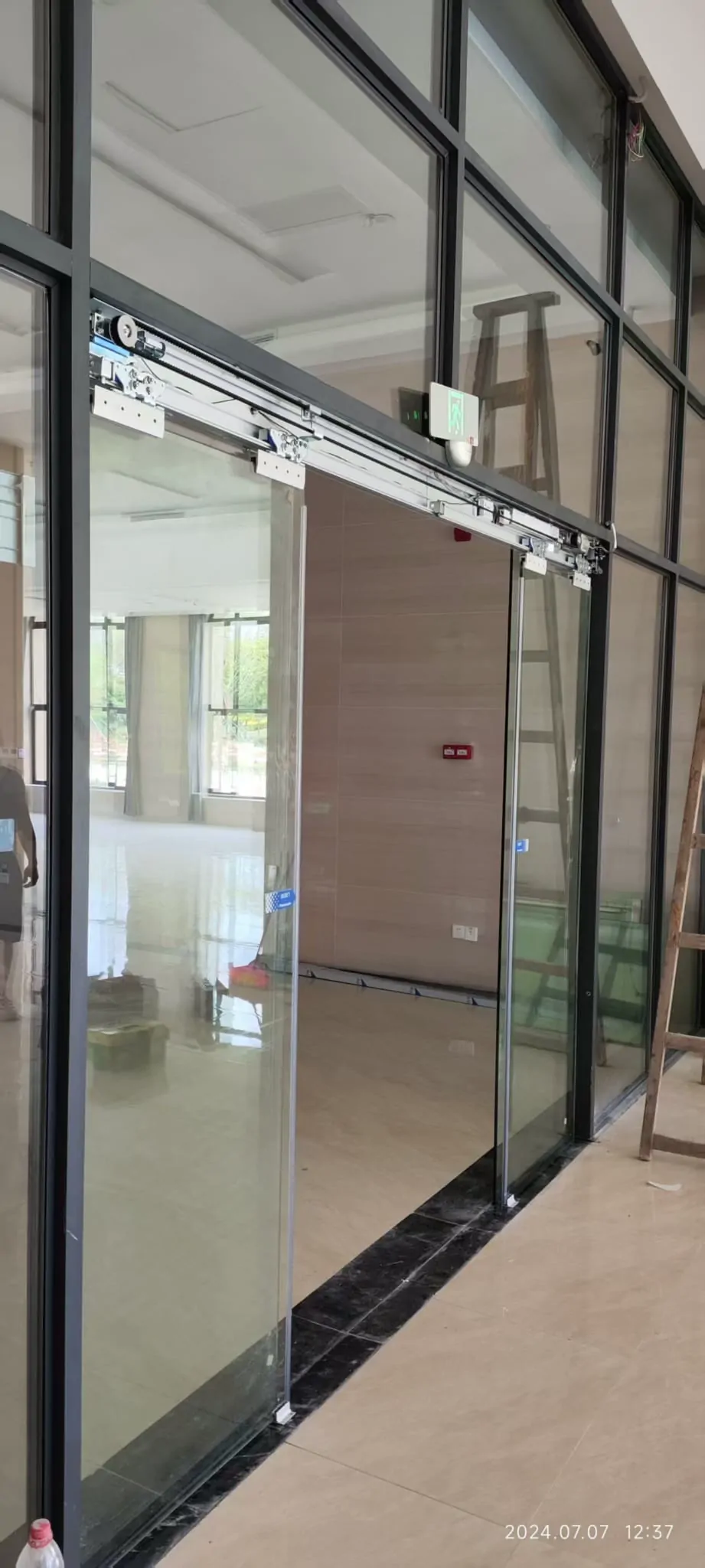
Glass automatic-door entrance showing the relationship between door leaves and overhead operator.
Safe checks before calling
There are useful checks that do not involve dismantling the door. From outside the moving path, look for rubbish, leaves, packaging, a displaced mat or fitting-out materials near the rail and floor guide. Check whether the glass and frame appear intact and whether the leaf is visibly catching another surface. A clean, unobstructed approach area also helps the activation sensor work as intended, but activation sensing and the safety sensing around the door zone have different jobs and cannot substitute for one another.
It is tempting to add lubricant when a door squeaks or rolls noisily. That can attract dirt, mask the original symptom or affect components that require a specific treatment. Avoid pressing on the leaf to make it move, holding it during its cycle, or switching off safeguards to test a theory. If staff need to report the issue, ask them to record the same simple facts each time: when it happened, which direction the door was moving, whether people were nearby, and whether the noise changed after the surrounding area was cleared.
- Check that no loose item, display material or floor mat has moved into the doorway.
- Wipe only accessible, external dirt using a suitable method for the surrounding finish; do not spray into the operator or sensors.
- Note indicator lights and any message shown on external controls without opening the cover.
Photos and video that help diagnosis
A short, steady video is usually more useful than a long explanation. Begin with a wide view that shows the whole doorway, then record one normal activation and the complete movement of the leaves. Stand to the side at a safe distance so the door and sound can both be assessed. If the noise occurs at a particular point, take a separate clip of that point. A close photo of the operator label can help identify the equipment, while an image of the rail and surrounding glass hardware may show the physical layout.
Please describe what is not visible in the recording. Say whether the sound is new, how often it occurs, whether it is worse when opening or closing, and whether the door has become slower or has reversed. Mention any accessible indicator light and any recent change around the entrance, such as cleaning works or objects repeatedly stored nearby, without assuming it caused the fault. Images and video guide the initial response; they do not reveal concealed wear, alignment, loading or internal settings, so they cannot replace an on-site assessment.
- Record a full opening and closing cycle with the sound audible.
- Photograph the complete entrance before taking close-ups.
- Capture the operator label, accessible rail area and any visible indicator light.
- State whether the problem follows rain, cleaning, busy periods or a particular time of day.
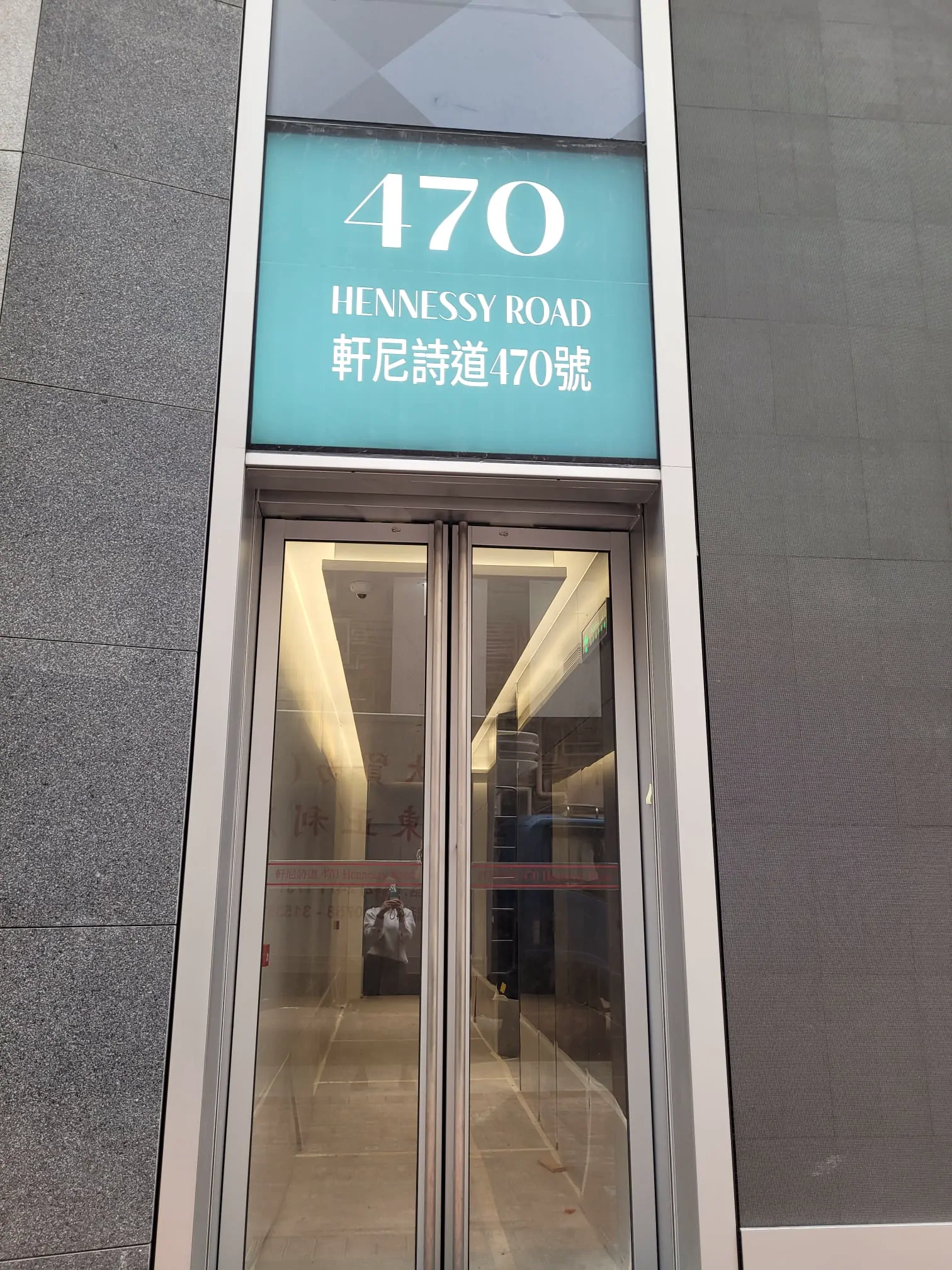
Commercial glass entrance with automatic sliding-door equipment.
Prevent the next interruption
Regular attention is most effective when it follows the door’s real operating conditions. A quiet office entrance used occasionally faces different demands from a busy retail doorway or a shared residential entrance exposed to dust and moisture. Keeping the sensor area clean, keeping the rail surroundings free of debris and responding to a small new sound before it develops into erratic movement are sensible starting points. The operator selection and any later replacement also need to account for leaf weight, opening size, traffic level, environment, noise expectations and ongoing parts support.
A noisy door can expose a broader decision rather than a single part issue. For example, changing a glass leaf or adapting an existing glass doorway requires consideration of the leaf, support, available rail space, frame and glass hardware; glass type, size, weight, holes and environment must be assessed together, not by thickness alone. At damp, coastal or otherwise corrosive locations, suitable corrosion-resistant materials and finishes may also need consideration. Back-up power, access control, fire interface and what happens during a power failure should be agreed during design rather than left to a later repair visit.
- Ask for the rail, moving hardware, operator operation and safety devices to be considered together.
- Keep a brief record of recurring noises and the conditions in which they occur.
- Plan maintenance around actual traffic, environment and the availability of replacement parts.
- For coastal or damp locations, ask whether material and surface choices suit corrosion risk.
Common questions
Is a light rolling sound always a fault?
A steady rolling sound can arise from dirt near the rail, normal wear in moving components, or contact between parts. It should not be dismissed if it becomes louder, occurs at one point in the travel, or arrives with shaking, slower movement or visible rubbing. Keep the area clear and arrange an inspection rather than applying oil or forcing the door by hand.
When should the door be taken out of use?
Do not continue normal use if the leaf catches, jumps, drags, stops unexpectedly, fails to stop for a person, appears loose, or produces grinding, banging or repeated impact sounds. Keep people away from the affected door where necessary and use an alternative safe route. Whether the doorway must be isolated depends on the actual door arrangement and site conditions.
What should I send for an initial assessment?
Send one wide photo showing the full entrance, a close photo of the operator label and rail area, and a short video with sound from a safe distance. Include the point in the cycle where the noise occurs, any indicator lights, and whether the problem happens on opening, closing or both. These materials support triage, but they cannot confirm the internal cause or site safety remotely.
Send a WhatsApp photo or video
If you would like a practical first check, send WhatsApp photos of the entrance, rail and operator label, plus a short video with sound showing one full opening and closing cycle. We can indicate what should be checked on site.